Across Perth, Western Australia, schools are pressured to provide children with safe, durable, and low-maintenance outdoor areas. Natural grass often struggles in sandy soils, shaded courtyards, or high-traffic play zones. For many education providers, synthetic turf has become a practical alternative that keeps playgrounds green and functional all year round.
This guide explores the benefits of artificial turf for schools, why it suits Perth’s climate, the safety standards it can meet, and how to maintain it well for students of all ages.
Why Schools in Perth Are Turning to Synthetic Turf
Education settings in Perth face unique landscaping challenges. From hot summers to sudden winter rain, natural grass lawns wear down quickly under student use. Common problems include:
- Bald patches in high-traffic areas.
- Water restrictions are making lawn upkeep difficult.
- Sandy soil leads to inconsistent grass growth.
- High maintenance costs with mowing and fertilising.
By installing artificial turf for schools, education providers can create outdoor spaces that look green all year, handle large numbers of children, and require less day-to-day upkeep.
The Benefits of Artificial Turf for Schools
1. Safety for Students
Modern synthetic turf is designed with safety in mind. Surfaces can include impact-absorbing bases that reduce the risk of injuries during play. This adds extra reassurance for playgrounds with climbing frames or sports equipment.
2. Consistent Appearance
Unlike natural grass, which struggles in shaded courtyards or sandy areas, turf stays neat and green all year. Schools can present well-kept grounds without relying on weather or costly irrigation.
3. Durability in High-Use Zones
From lunchtime sports to daily assemblies, school lawns receive heavy foot traffic. Artificial turf for schools holds up under these conditions, reducing the constant cycle of repair and replanting.
4. Lower Water Use
With water restrictions common across WA, synthetic turf helps schools save on irrigation. Artificial turf supports Perth’s sustainability goals while cutting water bills.
5. Versatility
Schools can use synthetic turf in many areas, including:
- Sports fields
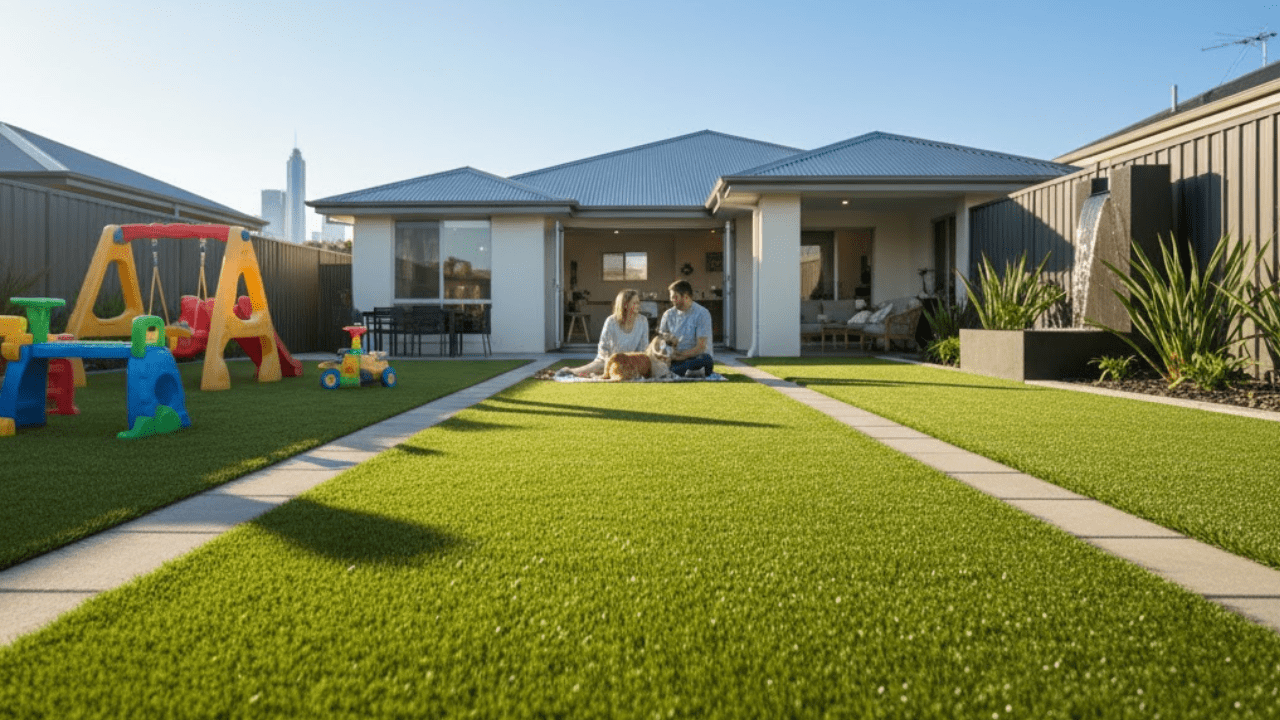
- Playgrounds
- Assembly areas
- Shaded courtyards
- Garden borders
Safety Considerations for Schools
Safety is often the top priority when exploring artificial turf for schools.
Impact Protection
Underlay shock pads can be installed beneath turf in playgrounds to soften falls. These are tested to industry standards, giving schools confidence in safer play zones.
Heat Management
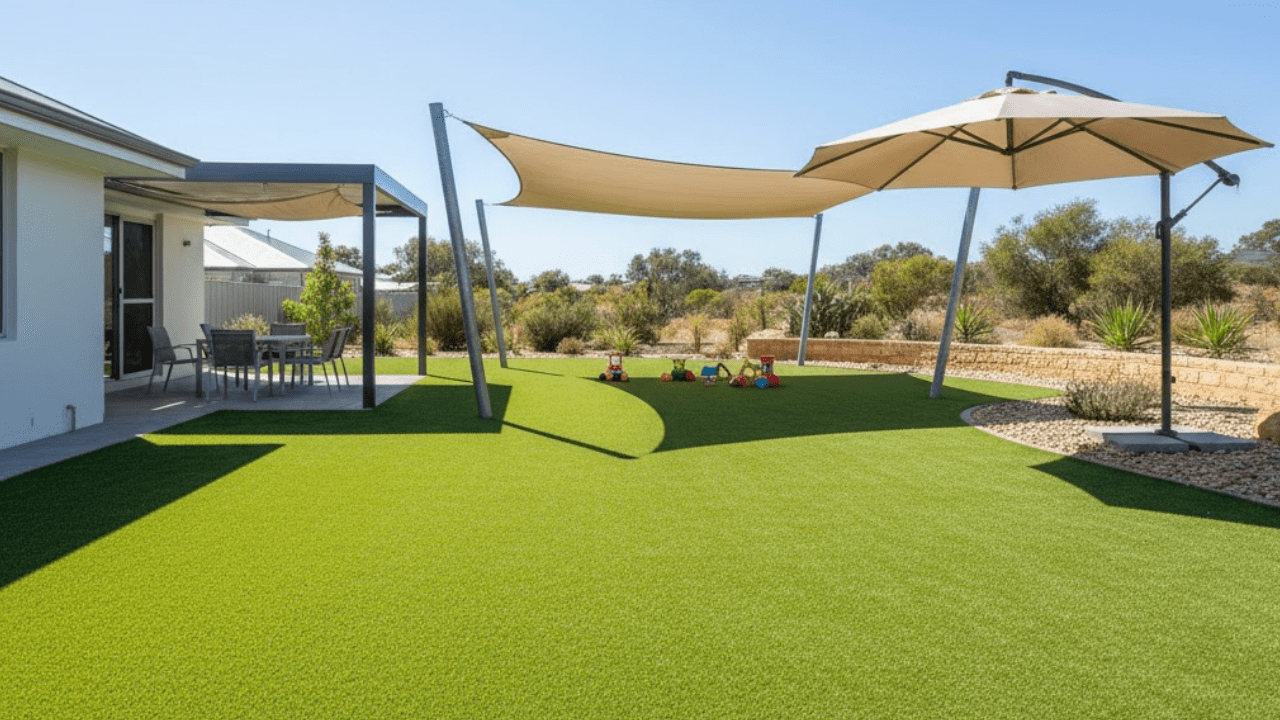
Perth summers can be hot. Turf infill such as silica sand can help manage surface temperatures, while shade sails or trees provide extra comfort.
Non-Toxic Materials
Quality turf products are free from harmful chemicals, making them suitable for young children. Many are also UV-stabilised to prevent fibre breakdown.
Installation Best Practices for Perth Schools
Installing turf in a school environment requires planning to meet safety and durability needs.
Key steps include:
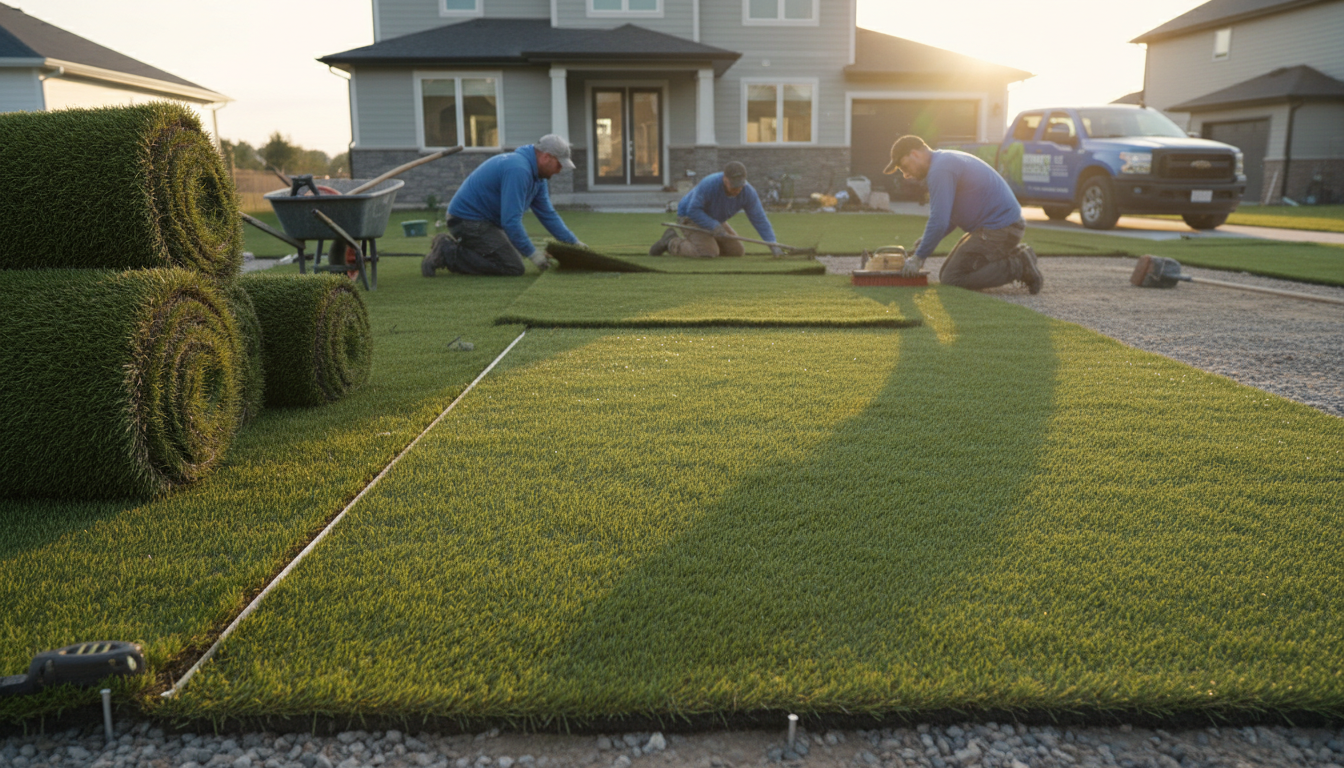
- Excavating existing soil and preparing a compacted base.
- Adding shock-absorbing underlay in play areas.
- Choosing UV-stabilised turf suited for Perth’s climate.
- Sealing edges to prevent tripping hazards.
- Brushing in kiln-dried silica sand for stability.
Schools may also want to phase installations to avoid disrupting classes or activities.
Maintenance: Keeping Turf Clean and Safe
While turf is low-maintenance, schools should still follow simple steps to keep surfaces in good condition.
Routine tasks include:
- Brushing fibres regularly to prevent flattening.
- Removing rubbish such as food wrappers or leaves.
- Rinse with water to clear dust and spills.
- Checking joins and edges for safety.
- Refreshing infill as required.
By adopting these practices, artificial turf for schools can remain safe and inviting for many years.
Checklist: Turf Care for Perth Schools
| Task | Frequency | Purpose |
| Brush fibres upright | Weekly | Keeps the surface natural-looking |
| Remove debris | Weekly | Prevents blockages and odours |
| Rinse surface | Monthly | Clears dust and spills |
| Inspect edges and joins | Each term | Maintains safety standards |
| Refresh infill | Annually | Supports fibre durability |
Common Questions from Perth Schools
Does synthetic turf get too hot in summer?
Direct sun can warm synthetic turf, but sand infill, shaded areas, and regular rinsing help manage the temperature.
Is turf safe for young children?
Yes, it offers a safe and soft surface when installed with non-toxic materials and shock pads.
How long does turf last in schools?
With regular care, artificial turf for schools can last many years, even with heavy use.
Can turf handle sports like soccer or footy?
Yes, many schools use it for sports courts and small fields, though choosing the right product is essential.
Perth Climate and Synthetic Turf
Local conditions in WA schools shape how educators and planners use turf.
- Hot summers: Turf remains green even under water restrictions, unlike natural grass.
- Sandy soils: A solid base ensures stability in Perth’s soil type.
- Heavy winter rain: Turf backing with drainage holes prevents waterlogging.
These climate benefits are key reasons many schools are adopting artificial turf for schools across Perth and regional WA.
Environmental Considerations
Sustainability is an essential focus for Perth schools. Synthetic turf can contribute to eco-friendly goals in several ways:
- Water conservation: No irrigation needed.
- Reduced chemical use: No fertilisers or pesticides required.
- Durable lifespan: Longer-lasting surfaces reduce replacement waste.
When paired with proper recycling programs at end-of-life, turf can align with broader environmental strategies.
Case Example: Perth School Courtyards
Several Perth schools have chosen synthetic turf for shaded courtyards that previously struggled with natural lawn. The results included:
- Cleaner, mud-free play areas during winter.
- Reduced complaints about patchy grass.
- More enjoyable spaces for assemblies and events.
While each site is different, these examples highlight how artificial turf for schools can solve long-standing maintenance challenges.
Soft Guide: DIY vs Professional Installation
Some schools may try DIY approaches for smaller projects, but experts often recommend professional installation. Installers bring equipment, safety knowledge, and experience to ensure surfaces meet child safety standards.
Staff may sometimes internally handle smaller garden borders or classroom courtyard projects when they follow proper guidance.
Final Thoughts
Synthetic turf is becoming a trusted option for schools across Perth, Western Australia. It helps education providers create safe, durable, and attractive spaces where kids can play, learn, and connect.
Schools can enjoy reliable outdoor areas that support student wellbeing and long-term sustainability by choosing quality products, planning carefully, and following simple maintenance steps.
If your school is considering artificial turf for schools or wants advice on creating safe play areas, contact Artificial Grass Perth today. Our team can provide guidance tailored to Perth’s climate and education needs.